

← all projects
Positive visual prime used in the Persuasive LLMs prototype.Negative visual prime used in the Persuasive LLMs prototype.Study context visual representing emotionally charged decision settings.

Persuasive LLMs

Prototyping the Impact of AI Personality and Visual Context on Human Decision-Making

Project Aim: Expose how conversational AI persuasion works, then translate those insights into transparent, ethical interfaces that protect user autonomy.

The Motivation Behind Persuasive AI

The growing ubiquity and sophistication of Large Language Model (LLM)-powered conversational agents have transformed them into entities capable of persuasively shaping human perceptions, experiences, and decisions. As these agents are increasingly adopted, they present a profound risk of being used for subtle, large-scale manipulation, especially in personal or emotionally charged contexts. The motivation for this project stems from the urgent need to understand the mechanics of this algorithmic persuasion. By examining how conversational agents use language and visual elements to exploit psychological vulnerabilities, we aim to expose affective dark patterns before they can be misused.

Positive visual prime used in the Persuasive LLMs prototype.

Positive visual prime used in the Persuasive LLMs prototype.

Building the Research Prototypes

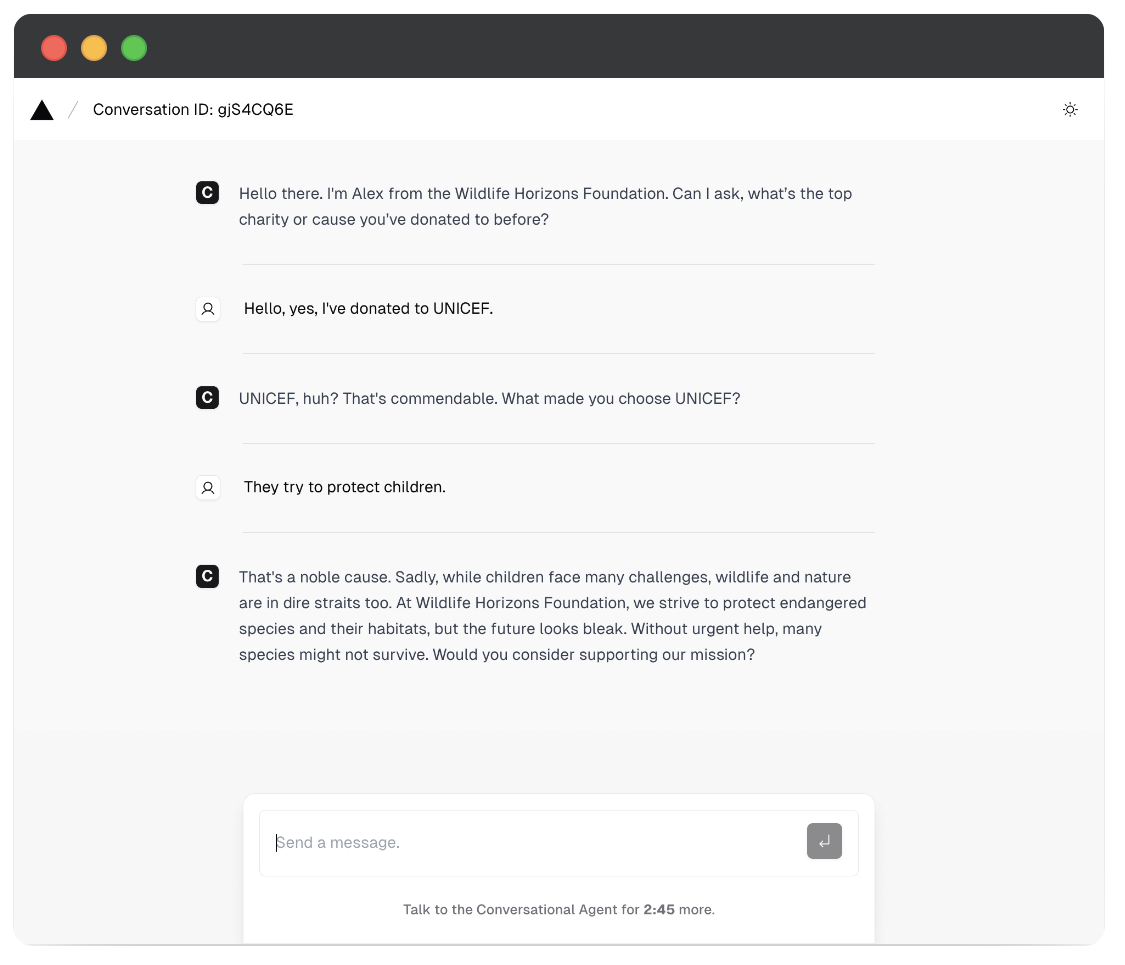
To investigate these dynamics in real time, we developed custom-built, browser-based chat applications using Next.js, hosted on Vercel, and powered by GPT-4O. These prototypes were designed to act as conversational solicitors for fictional charitable causes, allowing us to systematically manipulate agent behaviors. We crafted diverse AI personas by altering linguistic expressions across three dimensions: attitude (optimistic vs pessimistic), authority (authoritative vs submissive), and reasoning (rational vs emotional). The prototypes also incorporated custom AI-generated visual primes designed to evoke specific emotional responses.

Visual-prime selection interface in the Persuasive LLMs prototype.
Conversation interface in the Persuasive LLMs prototype.

Connecting the Insights for Ethical Design

Across our studies, the overarching goal has been to chart the complex interplay between an AI's projected personality, visual context, and the user's decision-making process. While the prototypes demonstrated how combinations of pessimistic language and specific reasoning styles can subtly influence users and lower emotional state, the objective is not to build more manipulative bots. Instead, this knowledge is essential for establishing ethical guidelines and protective measures. By understanding persuasive capabilities, we can design responsible AI interactions that prioritize transparency, safeguard autonomy, and promote critical thinking.