Food waste is a growing global challenge, and the hospitality sector is a significant contributor. While much attention is often placed on consumer habits or agriculture, a massive portion of avoidable food waste in restaurants actually occurs during the preparation and planning stages. Chefs stand at a critical decision point in the food supply chain; the choices they make regarding ingredients, menus, and cooking methods ultimately dictate the ecological footprint of a restaurant.


Knobie
An Interactive Recipe Planning System for Sustainable Food Services
Project Aim: Empower chefs to mitigate food waste and design a greener future, one recipe at a time.
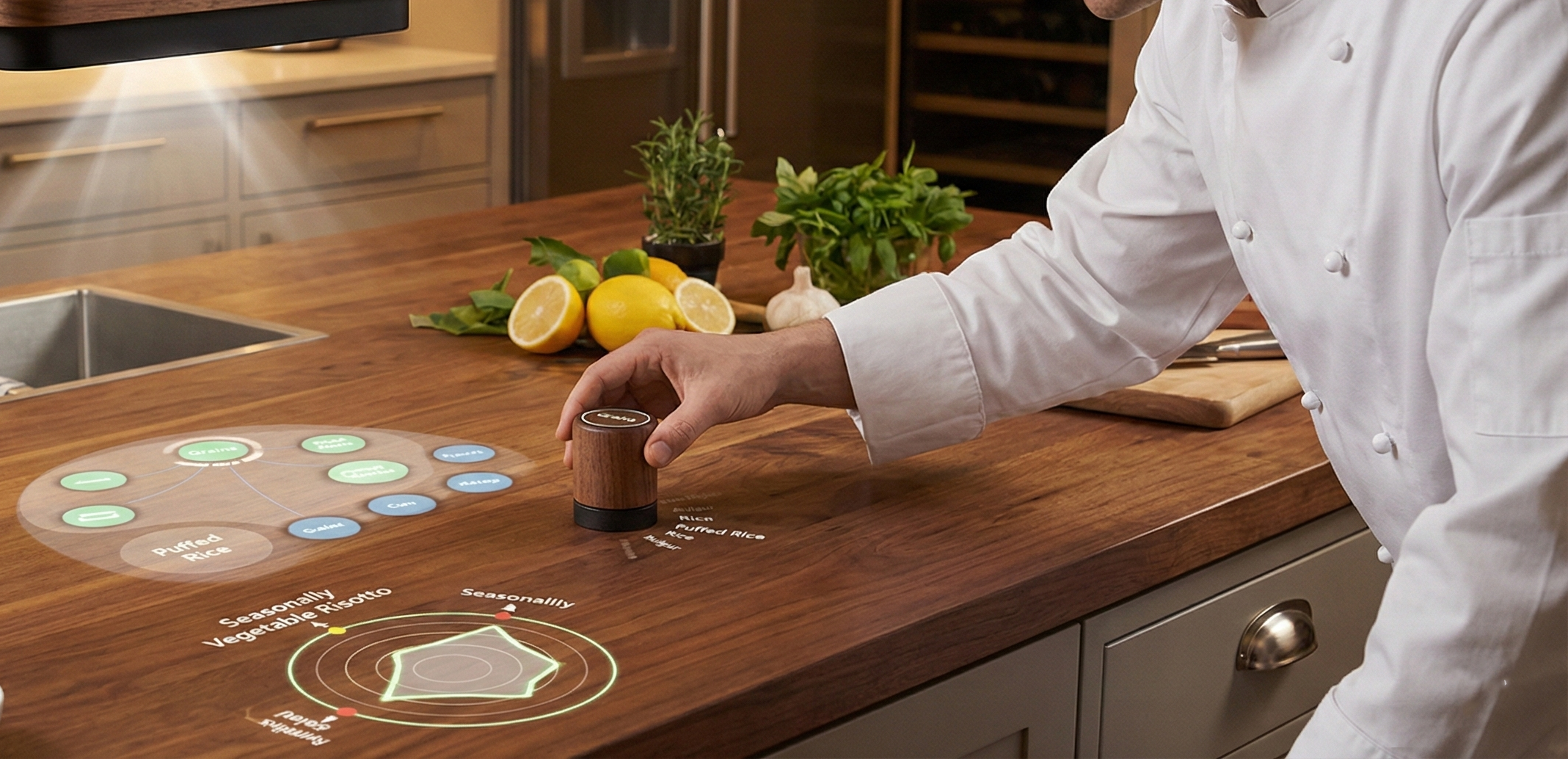
Chef interacting with the KNOBIE countertop projection setup.
Before developing a technical solution, we spent time observing and interviewing executive chefs in high-end hotel kitchens to understand the root causes of their food waste. We discovered that strict quality standards, unpredictable ordering patterns, and the separation of ingredients into edible versus inedible parts generated substantial waste. This highlighted the need for design interventions that could make practices like root-to-stem cooking more intuitive and help chefs manage their ingredients more dynamically.
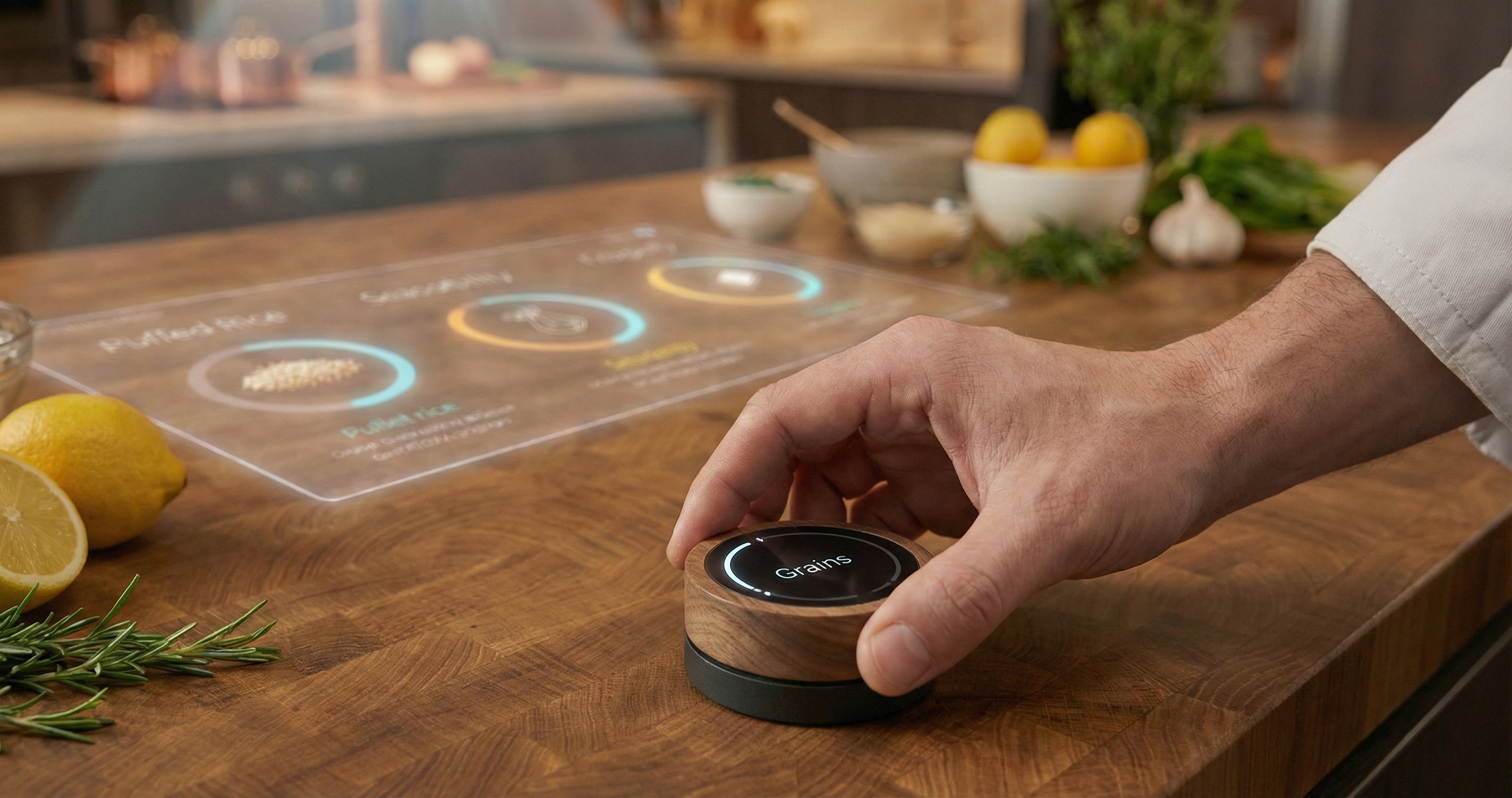
KNOBIE interface showing ingredient and recipe organization.
To address these challenges, we created KNOBIE, a novel interactive recipe-planning system. Knowing that chefs work in a highly tactile and hands-on environment, KNOBIE uses a projected display on the countertop and a physical wooden knob as the input device. By moving the knob like a tangible cursor, chefs can visually build, blend, and organize recipes by dragging and dropping digital ingredients, preserving the physical sensation that is so central to culinary work.
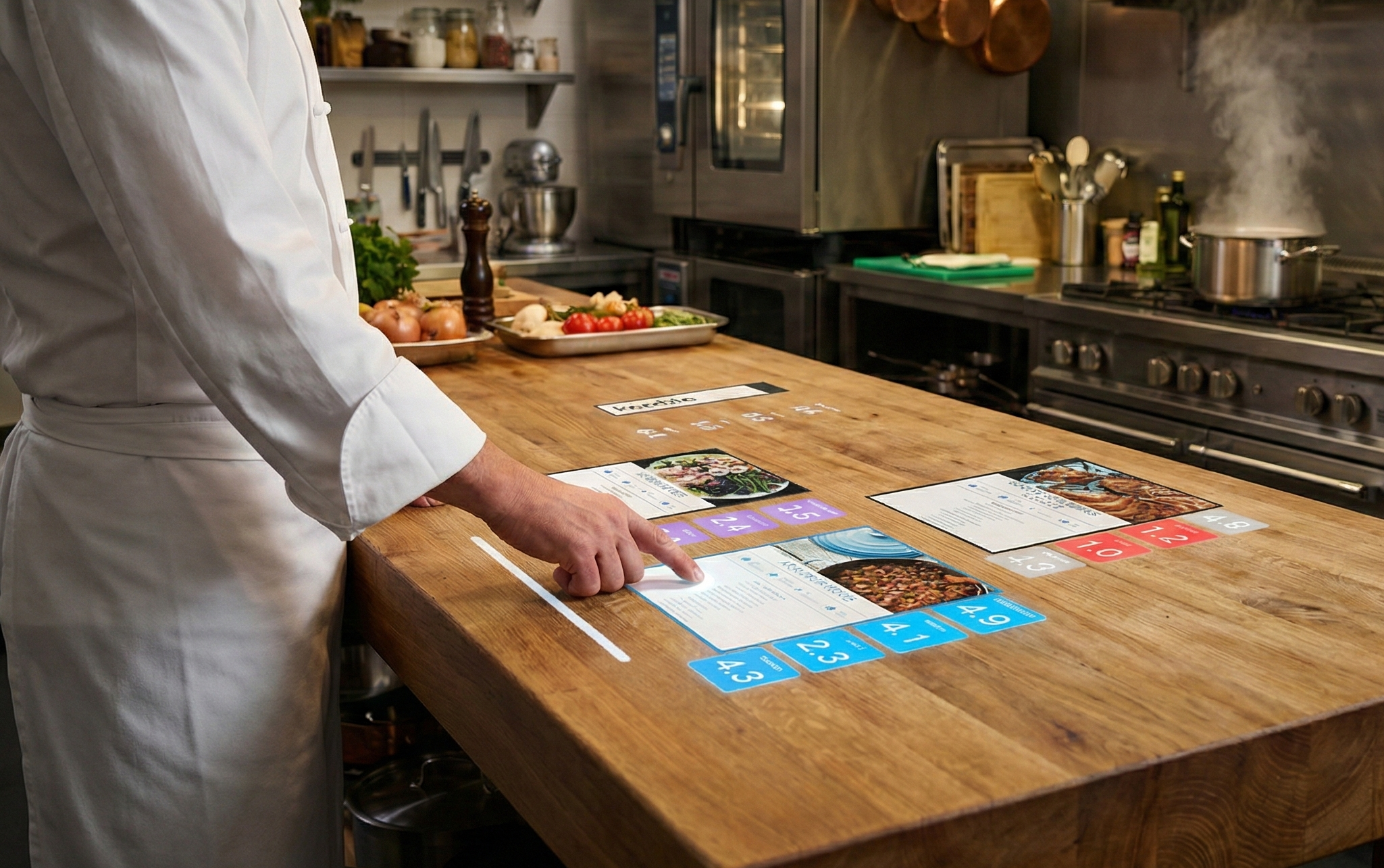
What makes KNOBIE unique is its ability to concurrently assess the environmental impact of a dish as it is being created. As chefs add or swap ingredients, the system provides real-time visual feedback across key dimensions: locality, seasonality, frugality, and cost. This allows chefs to immediately see how choosing an imported cheese over a local alternative, or an out-of-season vegetable, impacts the overall sustainability and budget of their menu.
Recipe development is an ongoing, collaborative process of trial and error. KNOBIE actively supports this by identifying problematic areas in a recipe and suggesting sustainable alternatives. For instance, if an ingredient lowers the seasonality score, the system might recommend a seasonal substitute that provides a similar flavor profile. This feature not only helps reduce food waste but also nurtures chefs' creativity by encouraging them to experiment with new, eco-friendly ingredient combinations.
Contributors
- Aykut Coskun
- Hakan Yilmazer
- Mert Yildiz
- Aysen Coskun
Papers
- Stop wasting, start tasting! Design speculations for reducing food waste in the hospitality sector
- KNOBIE: A Design Intervention for Supporting Chefs Sustainable Recipe Planning Practices
- How sustainable is your menu? Designing and assessing an interactive artefact to support chefs sustainable recipe-planning practices